The international partnership of the RISE project met in Austria on 28-29 April 2026 to discuss project progress, the development of Regional Action Plans, and the collection and further use of good practices. The two-day programme was an important step in the shared learning process aimed at providing practical support to food-sector small and medium-sized enterprises in the Danube Region in their digital, energy-efficiency and circular transition.
One of the main objectives of the RISE project is to ensure that food-sector and related enterprises operating in less developed regions receive practical development guidance tailored to their own operations, rather than general advice. The project therefore combines self-assessment tools, mentoring methodologies, expert cooperation and international knowledge-sharing formats. The meeting in Austria gave new momentum to this process, allowing partners to learn from each other’s regional experiences, good practices and on-site examples.
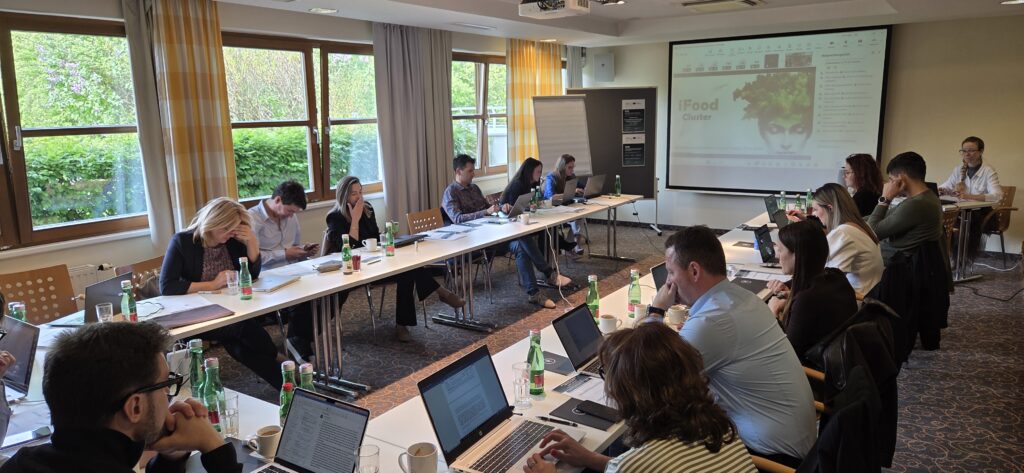
On the first day of the programme, the consortium reviewed the current status of the project, the tasks of the upcoming period, and the work related to the Regional Action Plans. These action plans show how the mentoring approach, assessment tools and the B2GreenHub platform developed within RISE can be embedded in local business development environments in the partner regions. Participants also worked on the Good Practice Handbook, which will summarise solutions collected during the project that may also be useful in other regions.
During the professional workshop sessions, several partners and invited experts presented initiatives related to support services for food-sector SMEs, innovation, energy efficiency, digitalisation and circular operation. The programme also included stakeholder presentations from the project regions, as well as presentations of related synergy projects and good practices.
From the Hungarian perspective, it was particularly important that the iFood Cluster, a strategic partner of the South Transdanubian Regional Innovation Agency, also introduced its work to the international audience. The example of the cluster shows how local food processors, small-scale producers, wineries, restaurants and regional actors can be connected in cooperation models that strengthen local values, visibility and business-to-business relations at the same time.
One of the key lessons of the first day was that food-sector enterprises in different regions face many similar challenges. Digitalisation often does not start with one major technological investment, but with better data management in everyday operations, more transparent internal processes or improved customer relations. Energy efficiency can often be approached through measurement, interpretation of consumption data and smaller interventions that can be launched quickly. Circular operation becomes most tangible through packaging decisions, material use, waste-stream management and more sustainable procurement practices.
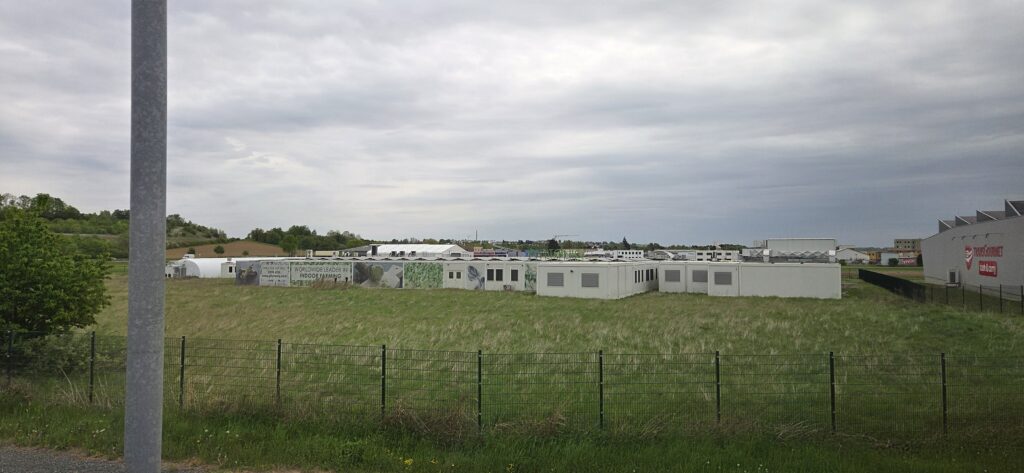
On the second day, the professional programme continued with study visits. Partners gained insight into the operation of local enterprises and initiatives at sites relevant from packaging, food-sector, agricultural and sustainability perspectives. The programme included visits to Carlo Spoon / Cardbox Packaging Pinkafeld GmbH, PhytonIQ GmbH, Biohof Unger and Amtmann KUHles.
The study visits were especially valuable because they presented the topics discussed in the project in a practical environment. Participants did not only listen to presentations, but could also see, through real operational examples, how innovation, sustainability, energy efficiency or local value creation can appear in the everyday practice of enterprises. Such on-site experiences play an important role in ensuring that the methods developed within the RISE project do not remain theoretical frameworks, but become genuinely applicable business development tools.
The international exchange also provided useful lessons for the South Transdanubian work. The Hungarian pilot activities of the RISE project have already shown, through company assessments and mentoring experiences, that enterprises primarily need practical, step-by-step support. The meeting in Austria reinforced this finding with international examples: expert support becomes truly useful for companies when it is linked to concrete operational situations, development needs and feasible next steps.
The meeting also contributed to the preparation of further RISE project results. The good practices shared by partners, the experiences related to the Regional Action Plans and the impressions gained during the study visits can all feed into the future use of the project results. This is particularly important because the outcomes of RISE can continue to support business development, innovation and sustainability work in the regions after the project has ended.
The RISE project is co-funded by the European Union within the framework of the Interreg Danube Region Programme.