The HERCULES-CE project aims to support the establishment and strengthening of renewable energy communities in Central Europe. The project builds on local participation, energy efficiency, the development of business models, the mitigation of energy poverty and the use of data-driven planning tools. The consortium brings together twelve partners from twelve regions across seven countries, working to support the creation of new energy communities and to enable existing ones to contribute to the green transition with stronger performance, more sustainable operation and greater social impact.
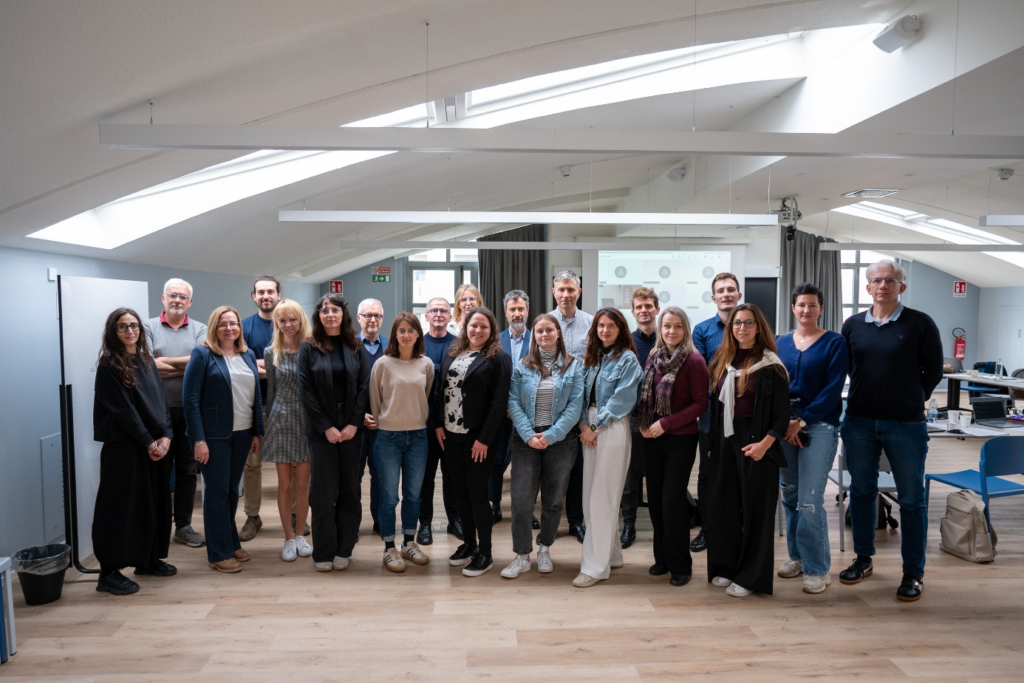
On 14–15 April 2026, the HERCULES-CE partnership held its next in-person partner meeting in Milan, at the Bovisa Durando campus of Politecnico di Milano. The first day of the meeting started with a technical committee meeting, where the host partner, Politecnico di Milano, and the Lead Partner, the Emilia-Romagna Region, welcomed the participants. The partners then reviewed the project’s progress and the next professional tasks.
The professional programme focused on the WP2 pilot activities. The work package leader and the task leader partners presented the status of the pilot energy communities, the results achieved since the previous meeting, any deviations, and the templates for local and summary reports.
Activity A2.1, led by DDRIÜ, aims to test innovative participatory approaches to improve the energy performance and business models of existing renewable energy communities. The pilot activities have been implemented in three selected locations: Poland, Hungary and Germany.
The activities carried out included assessing the baseline situation of the pilot energy communities, as well as analysing their technical profile, financial performance, business model, and engagement and communication aspects. Using the REC Manager tool, the partners assessed the pilot locations and their development potential by analysing alternative scenarios for production and consumption curves, as well as energy balances.
Under subtask 2.1, seven coaching sessions were organised with the participation of all partners. These transnational mentoring activities supported the progress of the pilots within the partnership, the sharing of internal results and joint professional learning. The final mentoring session and the discussion of the results achieved so far took place in connection with the Milan partner meeting.
As part of the stakeholder engagement activities, the partners developed target group-specific communication approaches within the engagement strategies. In Hungary, the modification of the pilot energy community’s objectives required a change in the target group. In Germany, the focus shifted towards addressing technical and financial challenges, while in Poland, different engagement events were organised due to the presence of several distinct target groups.
As an outcome of subtask 2.1, local assessment reports are currently under preparation. These reports will present the development results achieved by the energy communities within the pilot activities and provide further recommendations.
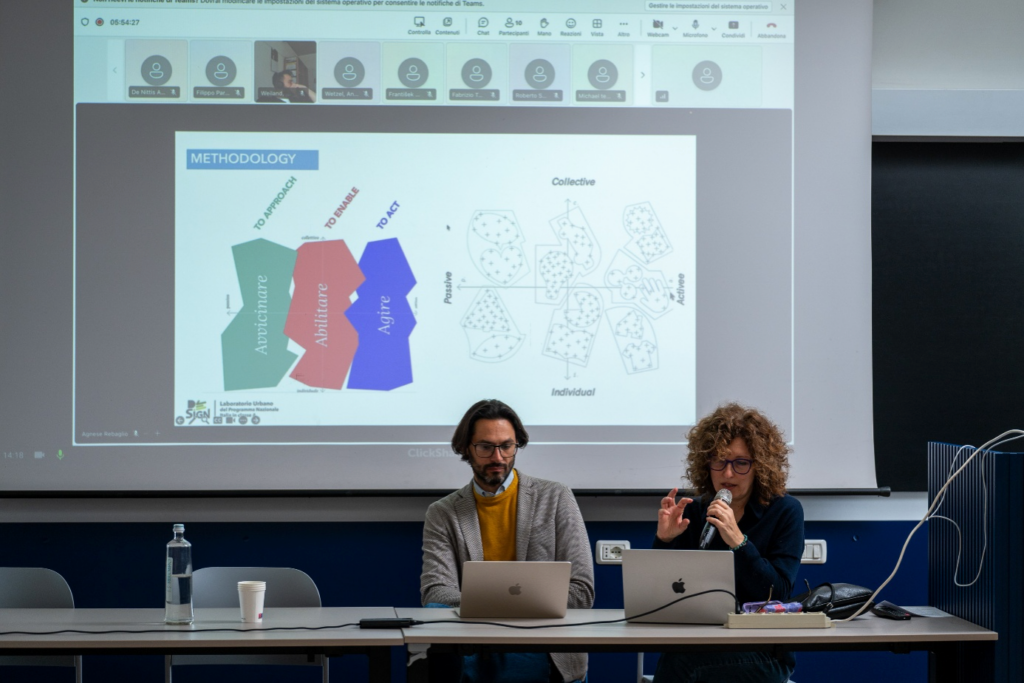
The synergies between the HERCULES-CE and NRGCOM projects were further strengthened by the involvement of the national expert of the NRGCOM REC Ambassador network in the assessment process, as well as in the cross-border coaching activity, during the implementation of the pilot activity. This connection helped ensure that the experiences related to the development of renewable energy communities were processed in a broader professional context, and that the results of the two projects mutually supported each other. As part of the meeting programme, the presentation entitled De. Sign: AAA – Humanising Energy, delivered on behalf of POLIMI, introduced the engagement methodology related to energy communities. The presentation underlined that the development of renewable energy communities is not exclusively a technological or financial matter, as it strongly depends on understanding, activating and building trust within local communities. The approach presented supported the partners in applying more targeted, human-centred engagement processes during the pilot activities, better aligned with local needs.
Subsequently, we discussed cross-border coaching activities, the current status of local community engagement and the implementation of the tasks under the next work package.
Within WP3, the project focuses on the development of the Action Plan, its uptake by partners and stakeholders, and tools supporting the longer-term sustainability of renewable energy communities.
The partners will have to carry out a broad range of event organisation tasks linked to the pilot activities.
The main objective of WP3 is to strengthen the commitment of partners and stakeholders to EU energy targets and renewable energy communities. Building on the results of the pilots, the work package supports the continuation of the HERCULES-CE Strategy and Action Plan, the uptake of solutions and the wider dissemination of the project’s impacts.
The partners will have to organise national workshops and info days to engage local stakeholders and potential energy community members, as well as transfer events aimed at laying the foundations for further cooperation.
A dedicated agenda item addressed the progress of the data-driven dashboard developed within the project, REC Manager, the next steps related to its final version and the possibilities for the tool’s further development.
On the second day, the partners discussed the development of the Action Plan, its uptake by local and professional stakeholders, and communication activities. The Milan meeting contributed to building a shared understanding among the partnership on the closure of the pilots, the use of results and the further strengthening of the role of renewable energy communities in Central Europe.