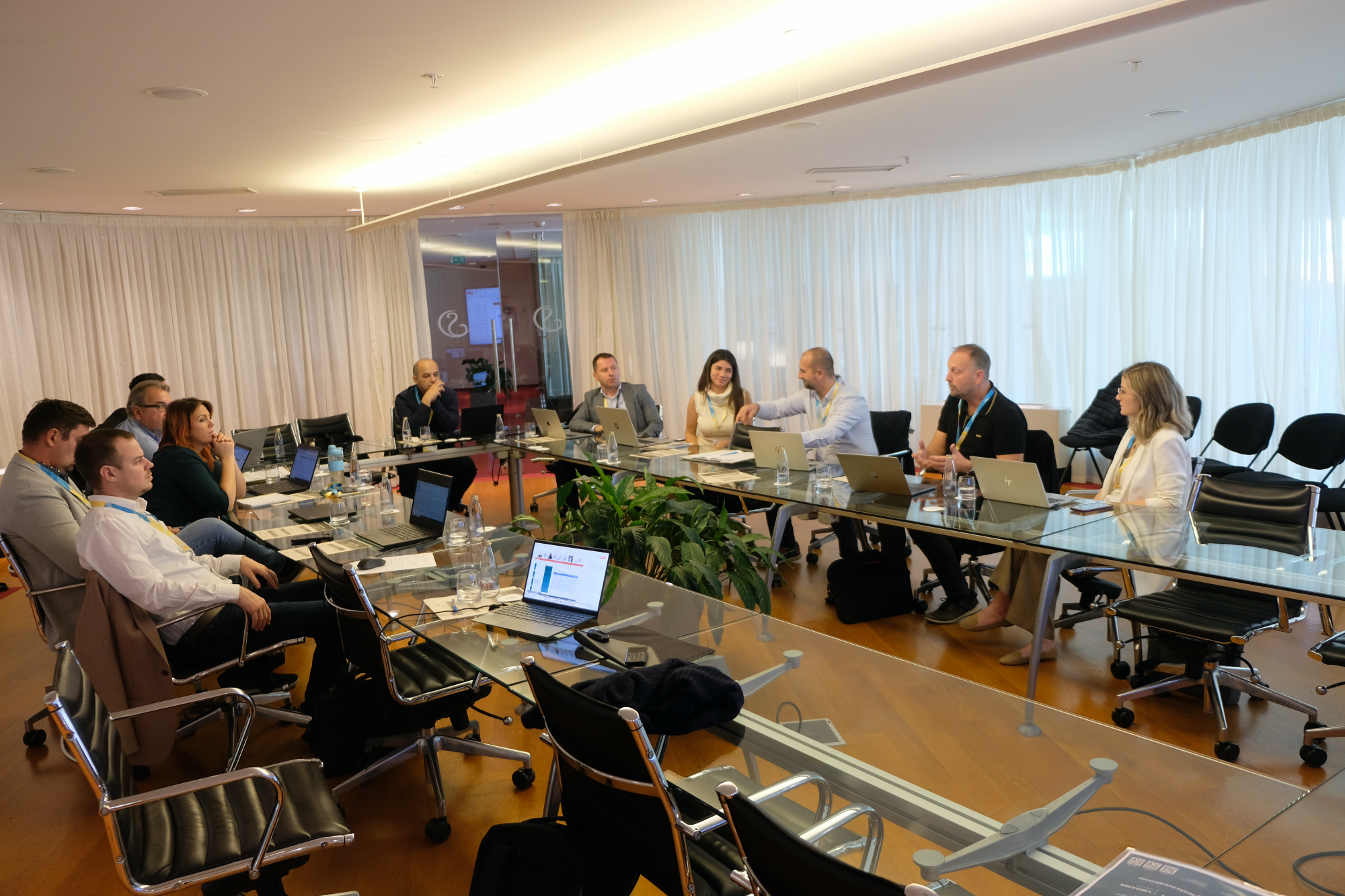
On October 22, alongside the high-profile Berlin Process Conference in Montenegro, the RISE project held its latest consortium meeting in the scenic coastal town of Budva. Hosted by the Chamber of Economy of Montenegro (CEM), the gathering brought together representatives from various partner organizations to review progress, assess ongoing activities and plan the next steps for supporting the Danube Region’s food industry.
Over the past five months, the RISE project has concentrated on identifying solution-seeking SMEs within the food industry, mapping solution providers, and identifying technology SMEs in areas such as digital transformation, energy efficiency and circular material use. Discussions in Budva covered survey findings on these solution providers and solution-seekers, offering a detailed snapshot of the region’s evolving food industry needs and opportunities. The meeting also explored funding options, complementary projects and the latest supportive events.
Goals
Looking ahead, project partners outlined the data analysis methodology and established five working groups, each dedicated to a specific project area. Earlier online meetings provided a foundation for these discussions on October 22, where members strengthened collaboration and outlined detailed project actions.
Key agenda items included establishing a transnational mentor network and refining the B2GreenHub platform—an innovative resource that connects food industry stakeholders with sustainable technology providers. The mentorship model will engage experts to guide SMEs in their green and digital transformations.
The Berlin Process: A Regional Collaboration Platform
Running parallel to the RISE meeting, the Berlin Process conference emphasized the importance of regional cooperation among Western Balkan countries. Established in 2014, the initiative promotes collaboration between the Western Balkans Six (WB6) and EU institutions, addressing economic integration and regional development. The recent conference in Montenegro spotlighted progress in trade, investment, and sustainable growth—providing further momentum for regional initiatives like the RISE Project.
The RISE project is co-financed by the European Union and the Hungarian State within the framework of the Interreg Danube Region programme.